
Waste Water Treatment
Waste Water Treatment - Industrial
Industrial Effluent Treatment Solutions
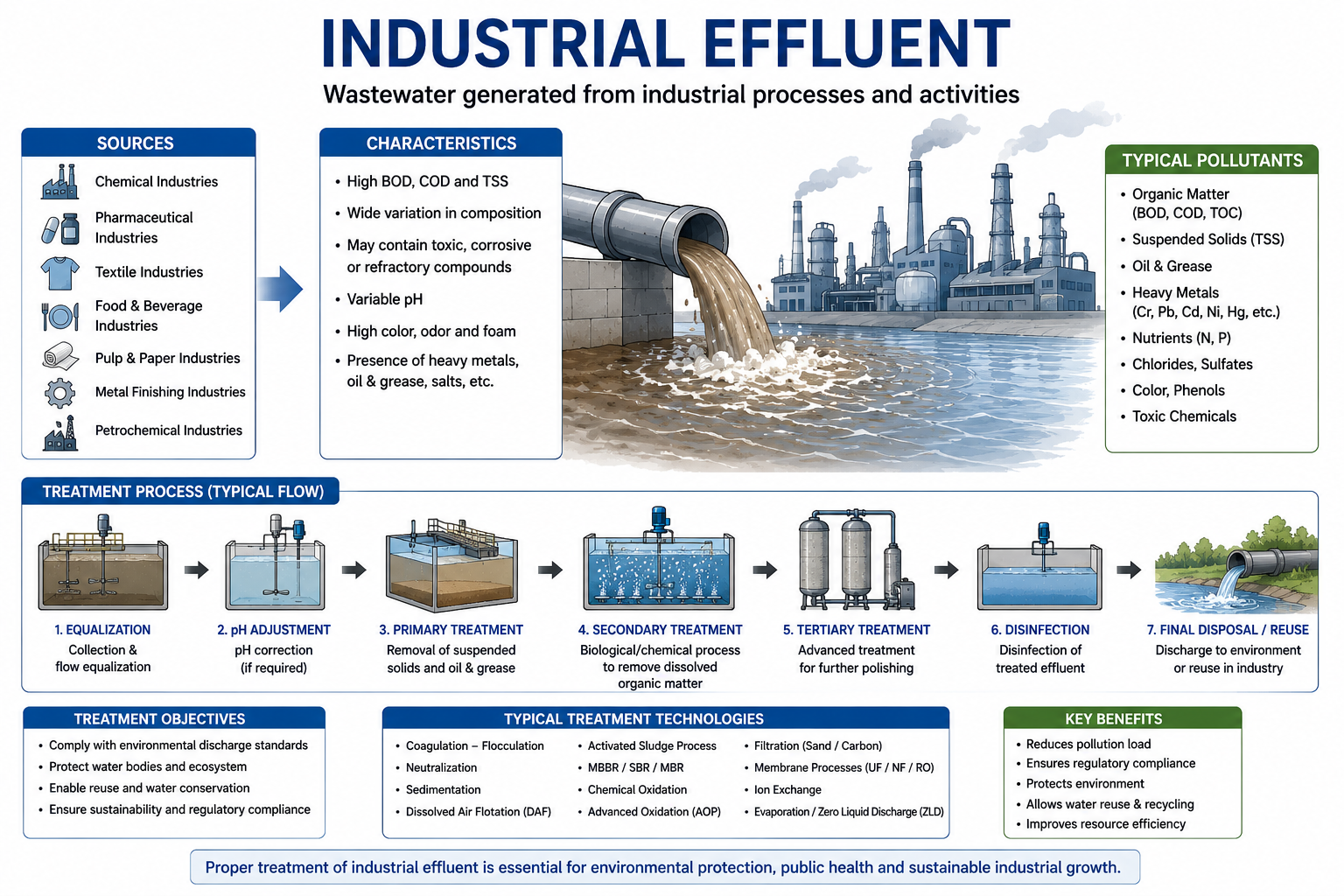
TSE Water delivers specialized Industrial Effluent Treatment Plants (ETP) designed to manage complex wastewater generated by various industries. With increasing environmental regulations and the need for water conservation, industries are focusing on wastewater minimization, treatment, and reuse within production processes.
Our expertise covers the treatment and removal of suspended solids, oil & grease, biodegradable organics, toxic contaminants, acids, and alkalies across a wide range of industrial sectors. TSE Water provides complete solutions integrating technologies such as filtration, clarification, biological treatment (aerobic and anaerobic), dewatering, disinfection, ion exchange, carbon filtration, reverse osmosis, and water recycling systems.
Backed by strong engineering capabilities and process expertise, TSE Water helps industries design and implement efficient treatment systems that meet evolving environmental and discharge standards.
Our solutions help industries to:
- Meet regulatory discharge standards and environmental compliance requirements
- Reduce wastewater disposal costs and municipal discharge surcharges
- Enable water reuse and recycling within plant operations
- Recover high-quality treated water for secondary applications
- Minimize environmental impact and support sustainable operations
Industrial Effluent Physicochemical Treatment
TSE Water provides physicochemical treatment systems that combine physical and chemical processes to effectively remove color, odor, heavy metals, suspended solids, and particulate matter from industrial wastewater.
These systems are designed as compact skid-mounted units, making them suitable for a wide range of capacities and easy installation. Physicochemical treatment is commonly used as a pre-treatment stage for effluent or sewage treatment plants, improving the efficiency of downstream biological or membrane treatment processes.
Key Benefits
- Effective removal of color, heavy metals, and suspended solids
- Compact skid-mounted design for quick installation
- Suitable for industrial effluent and sewage pre-treatment
- Improves performance of biological and membrane systems
- Custom-designed for different industrial wastewater characteristics
Anaerobic Treatment Technologies
TSE Water provides advanced anaerobic wastewater treatment technologies designed for industries with high organic load effluents. These systems efficiently convert organic pollutants into biogas (methane) while generating minimal sludge and reducing energy consumption.
Up-flow Anaerobic Sludge Blanket Reactor (UASB)
This reactor is designed to separate gas, water, and sludge under turbulent conditions, ensuring excellent contact between wastewater and biomass. UASB systems produce very low biological sludge while achieving efficient organic degradation.
Anaerobic Hybrid Reactor (AHR)
The hybrid reactor combines suspended biomass and packed media to enhance the contact between microorganisms and wastewater. It provides high treatment efficiency, compact footprint, and generates methane-rich biogas for energy recovery.
Moving Bed Anaerobic Reactor (MBAR)
This reactor uses bio-carrier media to support microbial growth, allowing treatment at high organic loading rates. The process is significantly faster than conventional anaerobic systems, enabling efficient treatment with smaller reactor volumes.
Key Benefits
- Stable microbial growth with bio-carrier media preventing biomass washout
- Suitable for a wide range of high-strength organic wastewater
- Low sludge generation compared to aerobic processes
- Biogas (methane) recovery that can be used for energy generation
- Compact systems with reduced operational costs
Water Reclamation with Separation Technologies for Industrial Effluent/Waste Water: UF / RO
TSE Water provides advanced water reclamation systems using Ultrafiltration (UF) and Reverse Osmosis (RO) technologies to recover high-quality water from the industrial effluent-wastewater streams. These membrane-based systems effectively remove suspended solids, colloids, macromolecules, and dissolved salts, enabling treated water to be reused in industrial processes.
UF membranes remove fine suspended particles and colloids, while RO systems eliminate Total Dissolved Solids (TDS), producing high-purity water suitable for reuse in utilities, cooling systems, and process applications.
Key Benefits
- High-performance membranes made from modified PES or PVDF polymers
- Integrated CEB (Chemical Enhanced Backwash) and CIP (Clean-in-Place) systems
- Available in semi-automatic and fully automatic configurations
- Optional auto-adjustable recovery and feed monitoring (conductivity & pH)
- Air scouring systems for effective membrane backwash
- Energy recovery devices such as turbine or pressure exchanger systems
- Bio-resistant feed spacer options for improved membrane life and performance
These systems help industries maximize water reuse, reduce freshwater consumption, and meet sustainability goals.
Industrial Effluent
TSE offers end-to-end industrial effluent treatment solutions for wastewater generated from factories, process plants, and manufacturing units. Our systems are designed to remove suspended solids, organic load, chemicals, oil, grease, and other pollutants to make the water suitable for safe discharge, recycling, or further treatment.
With customized design, reliable engineering, and efficient execution, TSE helps industries meet environmental compliance requirements while reducing water wastage and improving overall sustainability.
UASB
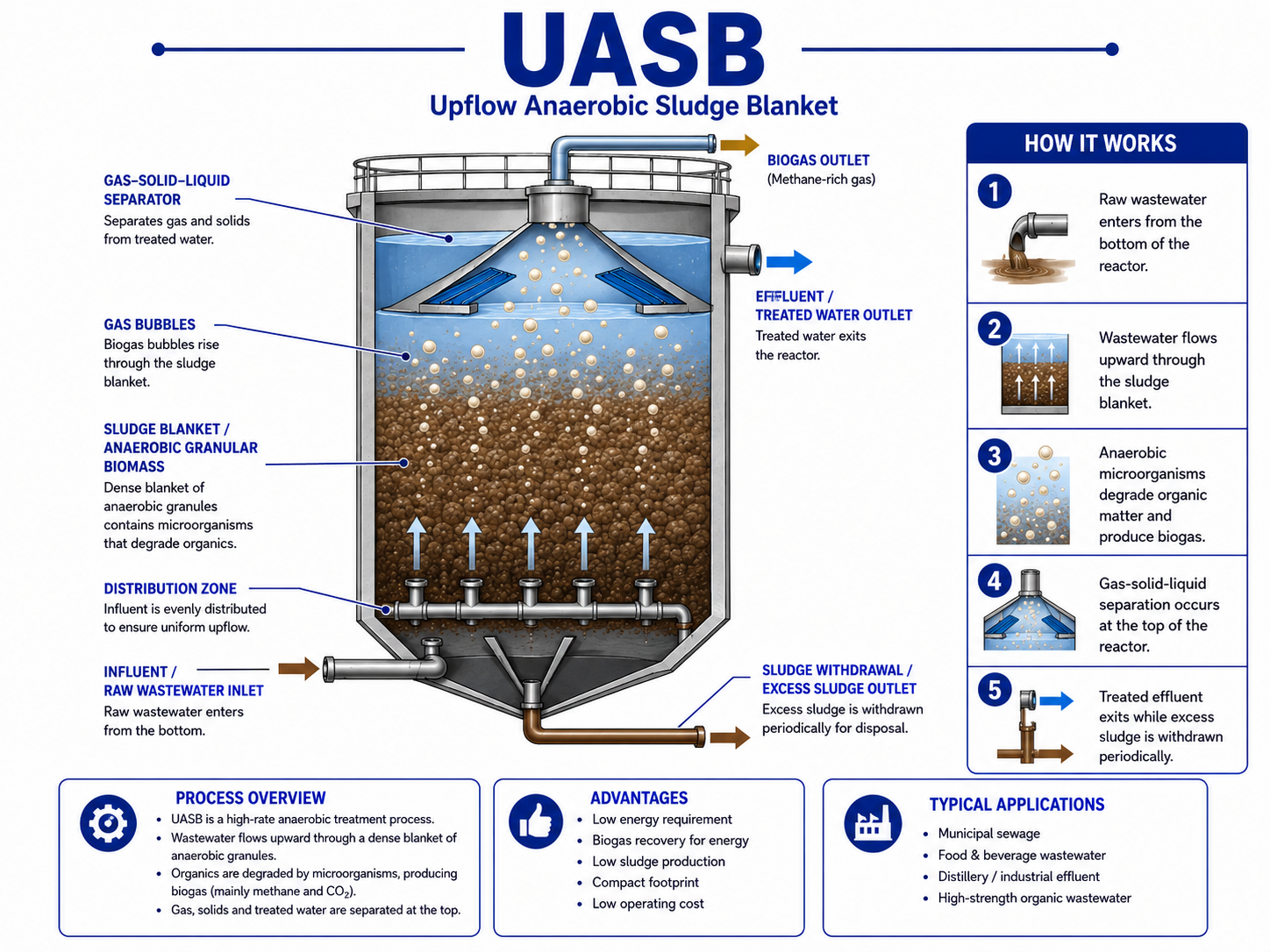
TSE offers UASB treatment solutions for industrial wastewater with high organic load, commonly generated from food processing, distilleries, dairies, chemical, textile, and other process industries. The Upflow Anaerobic Sludge Blanket process treats wastewater through anaerobic biological action, where microorganisms break down organic matter in the absence of oxygen and convert it into biogas.
Our UASB systems are designed for efficient pollutant reduction, low power consumption, and reduced sludge generation compared to conventional treatment methods. With proper engineering, installation, and integration with further treatment stages, TSE delivers reliable UASB solutions that support environmental compliance, resource recovery, and sustainable wastewater management.
UF / RO
TSE provides UF and RO treatment solutions for effective water purification, recycling, and reuse across industrial and commercial applications. Ultrafiltration helps remove suspended solids, turbidity, bacteria, and fine particles, while Reverse Osmosis further reduces dissolved salts, minerals, and other impurities to produce high-quality treated water.
Our UF / RO systems are designed for reliable performance, improved water recovery, and consistent output quality. With customized engineering, efficient installation, and smooth integration with existing treatment plants, TSE helps industries reduce freshwater dependency, optimize operating costs, and meet process water or reuse requirements.